Showing posts with label hackers. Show all posts

Monday, March 28, 2022

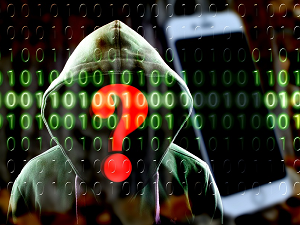
Hackers Are Increasingly Targeting Mobile Devices


Here's a statistic you're not going to like.  Based on research conducted by cybersecurity researchers at Proofpoint, there has been a staggering 500 percent increase in malware attacks against mobile devices during the opening months of 2022. The most significant peak so far this year occurred at the end of February.

Most of the malware that targets mobile devices tends to be relatively benign.  It's unlikely to encrypt all the files on your phone and demand a ransom. Although there are admittedly some malware strains that do that,  if your phone is infected with malware, it will likely be of the variety that quietly roots through your phone and steals usernames and passwords.

In some cases, you may get infected with a malware strain designed to take screenshots or track your location over time. Again, these are exceptions and not the rule. Even so, malware that steals your account information can be devastating in the longer term. Hackers can use that information to steal your identity, drain your accounts, max out your credit cards, and more.

There are three primary paths hackers use to get malware onto a target Android or iOS device.

The first and the most common is to poison an app and get it placed on either the Apple Store or the Google Play Store.  From there, users will download and install it while completely unaware that they have also installed malware.

SMS texts are another popular avenue of attack, which is why security professionals warn users against tapping links in text messages.  These may be harmless from a dear friend of yours or may have been put there by a hacker pretending to be your friend. When you tap the link, you're taken to a poisoned website which installs malware in the background.

Finally, there's email.  By now everyone has heard the dire warnings against clicking on links embedded in email messages or opening file attachments.  This applies whether you're reading your mail on your phone or your PC.

The bottom line is that you are increasingly a target whether you're on your PC or your phone.  Be careful.

SpartanTec, Inc. provides cybersecurity training for your employees to prevent them from inadvertently affecting your network via their phone, tablet or desktop computer. Call us today for more information.

SpartanTec, Inc.
800 25th Ave S #4320
North Myrtle Beach, SC 29582
(843) 418-4792
https://www.spartantec.com/


Friday, March 25, 2022

Hackers Get Source Code During Data Breach At Samsung


Samsung's corporate network was breached recently.  That's bad news all by itself. The company has recently confirmed that in addition to the confidential customer information that was stolen, the hackers also made off with the source code for the software used in the company's Galaxy smartphones.

The hackers responsible for the attack call themselves "Lapsus$."  Not long after their attack, they disclosed that they had made off with almost 190GB of archives.

Disturbingly, this group has been exceedingly busy so far in 2022 and extremely successful.  Just a week prior to the announcement regarding Samsung's data, the same group released a 20GB sample of documents stolen from Nvidia.  The group claims that this sample is part of a collection of stolen documents more than 1TB in size.

Aside from the aforementioned source code at this point, we do not know exactly what sorts of data the group of hackers may have compromised when they successfully breached Samsung's network.

For that matter, we do not yet know the full extent of the contents of the 1TB cache documents stolen from Nvidia because as members of Lapsus$ explained, they are currently in negotiations for the sale of that data.

This is the world we live in.  This is the shape of 2022 and years to come.  What the long-term implications might be are anyone's guess but fortunately, the advice for guarding against such attacks remains largely the same.

Be sure the software you use is updated with the latest security patches and constantly educate and reeducate your employees about the dangers of phishing campaigns to minimize your risk.

Failing that, take regular backups and have a rapid response team standing by that can spring into action if your defenses fail.  That's by no means a perfect solution, but it will make you a significantly harder target and there's value in that.

We live in a world that is changing at a rapid pace. Can your IT staff keep up? Now is the time to contact SpartanTec, Inc. for an in-depth cybersecurity analysis.

SpartanTec, Inc.
800 25th Ave S #4320
North Myrtle Beach, SC 29582
(843) 418-4792
https://www.spartantec.com/

Sunday, January 9, 2022

Hackers Are Using Big Brand Surveys To Scam Victims


Surveys have long been a playground of hackers and scammers.

That's true at any time of the year but it's especially true around the Holidays when such scams seem to attract even more unwitting victims.  In fact, some estimates place scammer profits revolving around fake surveys as being nearly $80 million a month. So it's big business for them.

The particulars vary somewhat from one operation to the next.

Here's how cybersecurity scams work in general:

First the scammer targets a perfectly legitimate survey or giveaway offered by a big well-known company or brand.

They'll copy the layout and format of this legitimate survey creating their own version of it.  By all outward appearances from the perspective of a visitor to the survey site, they're taking advantage of a legitimate offer.

Naturally there are some telltale signs.  Most of these fake sites are written by people who are not familiar with the English language and they aren't checked closely for quality control so you're likely to catch spelling errors or grammatically incorrect phrases that could serve to give away the game. Of course there's no hiding the URL but most of the people who land on a survey or giveaway page aren't paying much attention to that.

Once on the page the victim is in the funnel. The survey proceeds as you'd expect with a request for personal information at the end.  Sometimes they ask for a credit card (which the victim is assured won't be billed - it's merely being used for 'verification purposes.')

And you know how the story ends.

Armed with this freshly gleaned information the scammers make off with it either running up big bills on the victim's card or selling the data to the highest bidder.

This is a global issue.  It impacts people from all walks of life and from almost every country on the planet.  Don't fall for it.  Do your due diligence or just say no to anything that looks like it's too good to be true.

Have your employees been trained on what to look for when it comes to phishing emails? Are you sure your data is secure?

If you don't know the answer to these questions, it is time to contact SpartanTec by completing the form to the right.

SpartanTec, Inc.
800 25th Ave S #4320
North Myrtle Beach, SC 29582
(843) 418-4792
https://www.spartantec.com/

Used with permission from Article Aggregator

Wednesday, November 10, 2021

Hackers Turn To New Trick Called SEO Poisoning


Hackers have a new tool in their toolbox you should be aware of. Called SEO Poisoning or sometimes "search poisoning" the attack relies on Black Hat SEO techniques to optimize web content.

Researchers from Menlo Security have spotted two separate campaigns one linked to the SolarMarker backdoor and the other leveraging REvil ransomware to infect unsuspecting netizins.

Here's how the attacks work:

The hackers gain access to legitimate sites that rank well on Google and inject them with a variety of specific search terms.

Because the site is respected and ranks highly on its own surfers who find their way onto the site are more likely to accept that anything on the site is legitimate. The hackers leverage this trust by adding poisoned content to the site. This poisoned content appears in search results to be a PDF file requiring a download in order to view it.

When a user clicks on a download link they seal their fate. Behind the scenes they are redirected multiple times ultimately winding up at a poisoned site controlled by the hackers where a malicious payload is dropped onto the visitor's device.

Both of these campaigns have leveraged respected WordPress sites taking advantage of an undisclosed flaw in a plugin called 'Formidable Forms.' The hackers install their malicious PDFs in the wp-content/uploads/formidable/ folder.

Most cybercriminals who deploy ransomware demand exorbitant fees to regain access to your files. These two campaigns are notable for making much smaller demands ranging between $1,500 and $7,500.

If you have a WordPress site and you use the Formidable Forms plugin download the latest version as soon as possible. The plugin's developers moved quickly to address the issue and a fix is available. As long as you are running version 5.0.10 or later you should be fine.

Call SpartanTec, Inc. now if you need help in protecting your business against various cybersecurity threats.

SpartanTec, Inc.
Myrtle Beach, SC 29577
(843) 420-9760
https://www.spartantec.com/

Serving: Myrtle Beach, North Myrtle Beach, Columbia, Wilmington, Fayetteville, Florence, Charleston